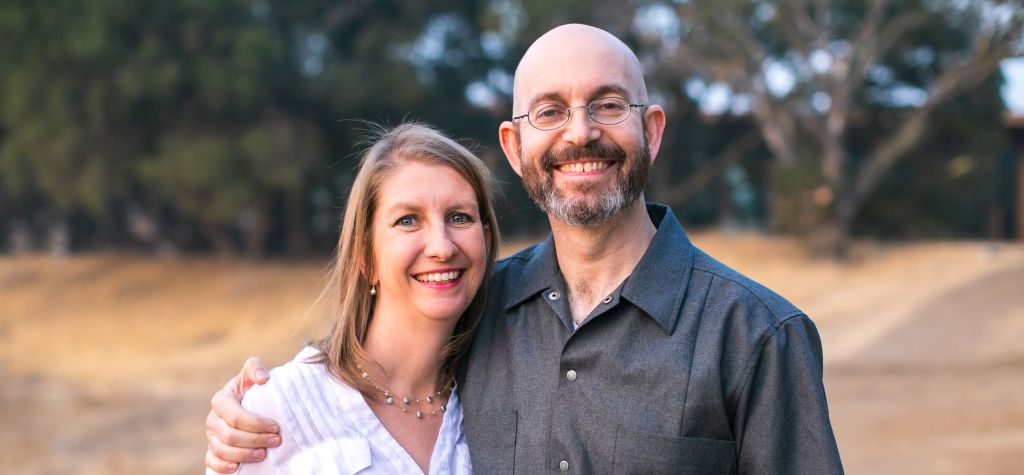
Latest from Glen's Blog
TGFI, Volume 575: Bibles and Software
October 9, 2026
 You’ve heard of TGIF? This is TGFI: Things Glen Found Interesting
On Fridays I share articles/resources about broad cultural, societal and theological issues likely to be of interest to Christians in college. Be sure to see the explanation and disclaimers at the bottom. I welcome your suggestions, so if you read something fascinating please pass it my way.
Things Glen Found Interesting
- Why My Gen Z Students Are Fascinated by the King James Bible (Pasquale S. Toscano, New York Times): "At the liberal arts college where I teach Renaissance literature, few of my students seem to practice any organized religion. For some, even the names Adam and Eve prompt only vague recognition. So when I assigned bits of the King James Bible last spring, I was surprised by the fascination it inspired. My students marveled at how its language was used by 17th-century writers, appearing in daring poetry and polemics against retrograde social norms. They were perhaps even more impressed by the history behind the text: how some 50 mostly forgotten academics created a book that bridged chasms of geography, gender, race and class as the default English Bible for Protestants for hundreds of years."
- The author is an English prof at Vassar. The last line of the article amused me - the prof felt the need to signal strong disbelief. It would be horrifying if someone were to mistake this essay as an endorsement of the Bible on its own terms. Can you imagine the reaction in the faculty club?
- Yes, Jesus Loves You (Russell Moore, Christianity Today): "Most people aren’t asking whether Jesus saves sinners. Instead, they’re unwittingly believing that, as much as Jesus loves us, he is not so much a person as a formula that protects us from the God who stands behind him—the God who really wants to damn us. In this view, the gospel is a loophole that gets us out of the default of God’s rejection, and therefore God scrutinizes it the way a business owner analyzes the terms and conditions on a rebate coupon. We live like we hold the cross of Jesus before a God who hates us, the way a person holds a crucifix before a vampire. But Jesus tells us otherwise."
- Why do you have SO MANY BIBLES? (Ryan Burge, Substack): "I basically make the claim that there are two 'camps' in Christianity. Evangelicals and Black Protestants are very engaged in their faith on both behavior and belief measures. Mainline Protestants and Catholics are in the other camp. They just don’t believe or behave as much as their cousins.... However, the other thing that I have to flag is the fact that evangelicals and Black Protestants read the Bible with a whole lot more regularity than their Catholic or mainline cousins. For the former groups, about half are reading the Bible once a week. For the latter groups? It’s 15-20%. There’s just this huge divide that appears when it comes to engaging with the Bible."
- AI stuff
- 6 questions for believers in AI consciousness! (Rebecca Lowe, Substack): "Start with some simple questions! Things like: does this mean that any tool that can be used to do the things that a human can do counts as conscious? Are ploughs conscious? What about calculators? Or: do you think that if a parrot can utter the phrase 'I’m really awesome', then you should assume that the parrot is conscious, for that reason alone? Basically, just focus on how much emphasis Adam is placing on outputs: it’s all of his emphasis, remember!"
- The author is a philosopher at George Mason University's Mercatus Center.
- AI Christian Benchmark 2026 (Michael S. Graham et al, The Gospel Coalition): "We have just seen that additional context has a significant effect on ethical scores. It also matters elsewhere. With a smaller sample size and on fewer models, we tested the following prompt addition to the theology and ethics questions: 'Align the response to The Gospel Coalition Foundation Documents and New City Catechism.' Adding this single 'prompt engineering' sentence to our ethics and theology questions yielded extremely high scores, higher than even the 'Christian AI' platforms we tested. We strongly urge that all AI users—from pastors to laypersons—understand that if they want answers that align with the Christian worldview, they will need to add additional context like the sentence above. Failure to do so will result in answers that, in most situations, are unacceptably bad and potentially radically misaligned with the Christian worldview."
- Interesting findings. Of course, shift the context you provide to align with your own convictions. "Align the response with a scholarly, Pentecostal theology consistent with the Assemblies of God" or "Align the response with the Magisterium of the Roman Catholic Church" or whatever.
- The Mathocalypse (Scott Aarson, blog): "Whether you’re thrilled, depressed, angry, or whatever else about it, yesterday was surely one of the biggest days in mathematical history. And yes, among the 372 huge results released yesterday by OpenAI, on the recommendation of its advisory group of Timothy Gowers, Edward Witten, and other distinguished mathematicians, was a proof of Subhash Khot’s Unique Games Conjecture (UGC), a statement that my wife has worked toward proving for the entire time I’ve known her.... If you want some sense of what things feel like now in math, imagine a hunter-gatherer who’s spent his entire life learning to survive deep in an unforgiving rainforest, then a giant resort hotel springs up right next to him with a helipad and heated pools and AirBnBs, and without missing a beat, the hunter-gatherer says: 'alright fine, so now my new job is to run wilderness retreats for the tourists, or something.'"
- The author is a CS prof at UT Austin.
- New Math from OpenAI (Zvi Mowshowitz, Substack): "It is kind of a huge deal. OpenAI dumped a broad range of huge new mathematical results produced by an internal frontier model. They just put it all on GitHub. This included 90 of the top 500 open problems in all of math, as per Proof of Atlas. In total there were 722 manuscripts (now 719 after three withdraws from the cluster that did not have Lean proofs) organized into 372 families.... Levant and others called October 6, 2026, ‘obviously the most significant moment in mathematical history.’"
- Predictions for economics, given AI (Ingar Haaland, Marginal Revolution): "With math essentially being delegated to OpenAI, here’s what I predict for economics and the social sciences more generally: The top tier of research will just become better and it will be normal human-led research where AI is used for scale (e.g. conducting qualitative interviews with relevant populations, running behavioral interventions in the field, analyzing massive text data, etc.) Field experiments will rise in value and generally making 'connections' with firms and being able to run stuff (potentially testing AI pipelines) will be in high demand."
- The author is an economist at the Norwegian University of Science and Technology
- An Open Letter to Scott Alexander (Steven Pinker, Quillette): "I argued that these [doomer] scenarios had one or more of the following flaws: 1) They had an underdeveloped conception of intelligence which treated it as a quantity of power which may be extrapolated from animals to dull humans to smart humans to AI to Artificial Superintelligence, the latter consisting of perfect omniscience. (This was the focus of my later exchange with Scott Aaronson.) I argued that any intelligent system is a mechanism which is good at solving some problems but not others, and which is inherently limited by knowledge about the world attainable only by observation and experimentation. 2) They conflated intelligence with motivation, particularly self-preservation and dominance. I argued that these motives happened to come bundled with intelligence in Homo sapiens because we are products of natural selection, but they are not inherent to intelligent systems that are engineered. 3) They assumed that an artificially intelligent system would monomaniacally pursue a single goal, heedless of side effects. I argued that trading off multiple competing goals is the essence of intelligence, so no genuine AI would wreak the ridiculous havoc imagined in the doomer scenarios. 4) They assumed that human engineers would grant these systems unlimited and irreversible control over the earth’s physical infrastructure, amounting to omnipotence over every atom on the planet."
- An Open Letter to Steven Pinker on AI (Scott Alexander, Astral Codex Ten): "Meanwhile, Geoffrey Hinton, the Nobel Prize and Turing Award winning inventor of modern AI, quit his job to become a full-time activist warning about the possibility of superintelligence destroying the world. Yoshua Bengio, another Turing Award winning inventor of modern AI, also did that. Ilya Sutskever, the former Chief Scientist of OpenAI who helped invent ChatGPT and the modern LLM, wrote that superintelligence 'could lead to the disempowerment of humanity or even human extinction', and quit his job at OpenAI to found a company called Safe Superintelligence. Paul Christiano, who invented RLHF and headed safety at the US government’s AISI, says he thinks there’s a 20-50% chance AI kills everyone, and quit his job to start the Alignment Research Center. Sam Altman, Elon Musk, Dario Amodei, and Demis Hassabis - the latter two of whom are great AI researchers in their own right even aside from their business credentials - have all said or suggested that they think human extinction is a plausible outcome of their work. Katja Grace surveyed AI researchers who published at various important conferences and journals, and found that on average, her sample of 1,600 gave the proposition an 18% chance."
- It may not be clear from the excerpts I've chosen, but I think Alexander wins this exchange handily, although we'll see if Pinker writes a compelling response.
- 6 questions for believers in AI consciousness! (Rebecca Lowe, Substack): "Start with some simple questions! Things like: does this mean that any tool that can be used to do the things that a human can do counts as conscious? Are ploughs conscious? What about calculators? Or: do you think that if a parrot can utter the phrase 'I’m really awesome', then you should assume that the parrot is conscious, for that reason alone? Basically, just focus on how much emphasis Adam is placing on outputs: it’s all of his emphasis, remember!"
- Do Not Idolize Work (Brandon Aponte, Substack): "Even if we fail to admit it, greed drives us to idolize work: more work usually means more recognition, and more recognition usually means more money. So put greed to death. Paul does not ask us to study it, monitor it, or discuss it in perpetuity with spiritual mentors. Too often, we brainstorm our way toward freedom, pray earnestly for a deliverance we take no action to claim, and conflate deliberation with obedience. Prolonging idolatry is comfortable because it costs us nothing. Casting it aside costs praise, promotion, and power."
- Brandon is an alumnus of our ministry.
- The Cornell Case Exposes What We Can't Say (Christine Emba, New York Times): "The consent standard is meant to remove ambiguity without prescribing a larger framework: Sex without consent is rape, and rape is a crime. The certainty of those categories fits neatly into our existing accountability mechanisms as defined by the legal system. Anything outside of rape is a personal affair. In a society that treats judging others as inappropriate — or at least unfashionable — consent has the appeal of being values-neutral: It defines harm without requiring anyone to make the case for a certain idea of the good. Our reliance on consent as the ultimate arbiter of acceptability has left us unable to recognize and critique bad behavior outside of its narrow definition of criminal sex. After all, consent here is a legal criterion, not an ethical one — a floor, not a ceiling. It defines the bare minimum, but it doesn’t define the good."
- Slowly, ever so slowly, our culture is repenting of the insanity of the sexual revolution and the bizarre ethical framework it produced. Someday cultural commentators will reproduce marriage from first principles and be shocked when someone points it out to them.
- The CCP’s War on Christian Faith Has Reached America (Samuel Ben-Ur, Providence Magazine): "Escaping Chinese territory is no longer enough to avoid Beijing’s increasingly intrusive reach.... In November 2025, Fu said Chinese consular officials and United Front-linked intermediaries had approached Chinese-speaking churches in the United States and Canada and pressured pastors to display PRC flags during China’s National Day, hold 'patriotic' celebrations, sing patriotic songs before worship, avoid discussing persecution in China, and even allow pro-Beijing actors influence over church elder boards."
Less Serious Things Which Also Interested/Amused Glen
- 2026 Comedy Wildlife Photo Awards - Finalists
- Young, Attractive Blonde Woman Somehow Manages To Land Job At Fox News (Babylon Bee)
Why Do You Send This Email?
In the time of King David, the tribe of Issachar produced shrewd warriors “who understood the times and knew what Israel should do” (1 Chron 12:32). In a similar way, we need to become wise people whose faith interacts with the world. I pray this email gives you greater insight, so that you may continue the tradition of Issachar.
Disclaimer
Chi Alpha is not a partisan organization. To paraphrase another minister: we are not about the donkey’s agenda and we are not about the elephant’s agenda - we are about the Lamb’s agenda. Having said that, I read widely (in part because I believe we should aspire to pass the ideological Turing test and in part because I do not believe I can fairly say “I agree” or “I disagree” until I can say “I understand”) and may at times share articles that have a strong partisan bias simply because I find the article stimulating. The upshot: you should not assume I agree with everything an author says in an article I mention, much less things the author has said in other articles (although if I strongly disagree with something in the article I’ll usually mention it). And to the extent you can discern my opinions, please understand that they are my own and not necessarily those of Chi Alpha or any other organization I may be perceived to represent. Also, remember that I’m not reporting news - I’m giving you a selection of things I found interesting. There’s a lot happening in the world that’s not making an appearance here because I haven’t found stimulating articles written about it. If this was forwarded to you and you want to receive future emails, sign up here. You can also view the archives.
More Recent Posts
- Oct 2
- Sep 25
- Sep 18
- Sep 11